Failing Faux Stone Wall Stripped Down and Rebuilt Right
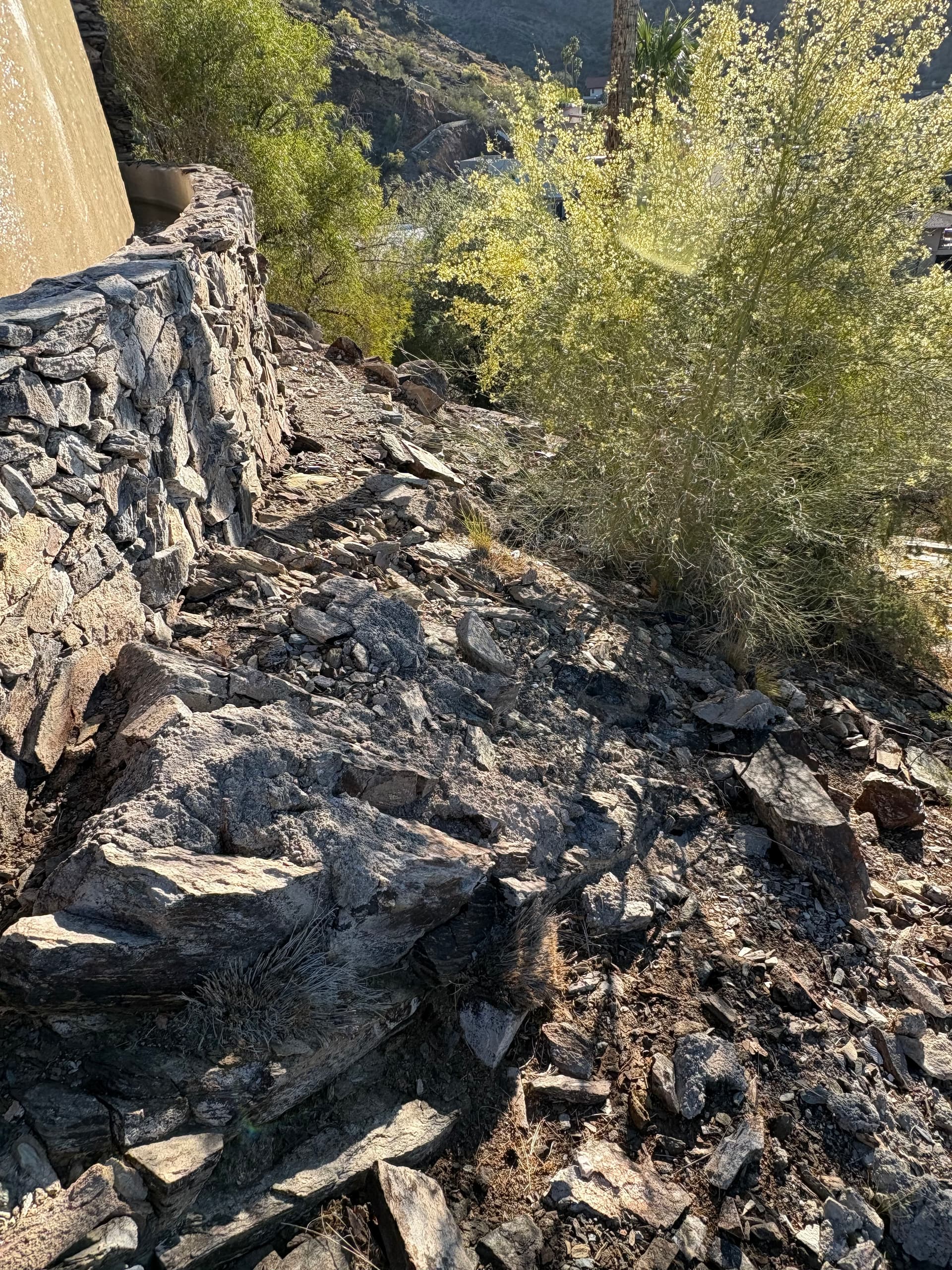
Loose stone around a pool wall is one of those problems that starts small and gets bad fast. What looks like a cosmetic issue on the surface is usually a sign that the bond underneath has given out - and once that happens, pieces start falling. That's a hazard, not just an eyesore.
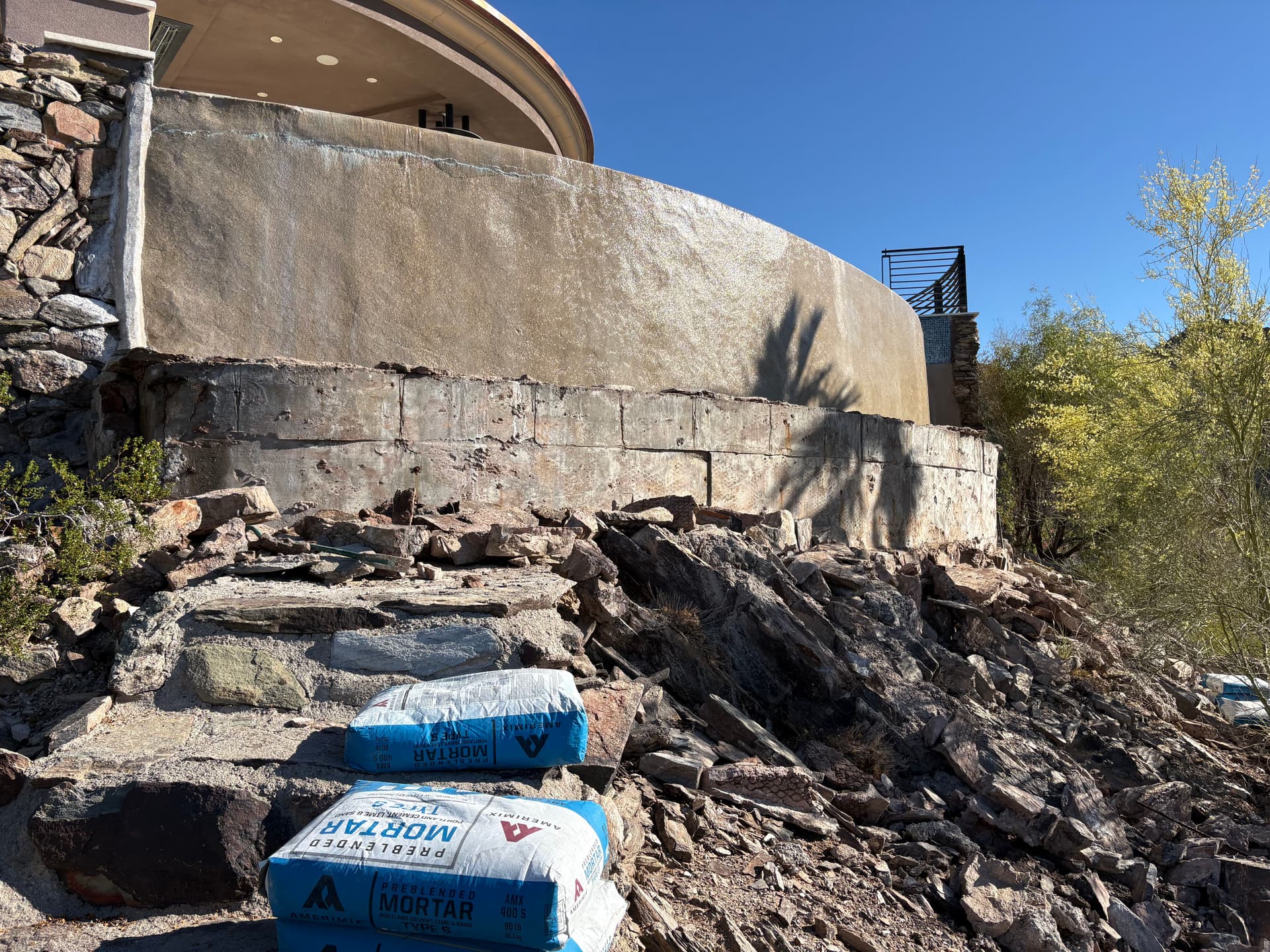
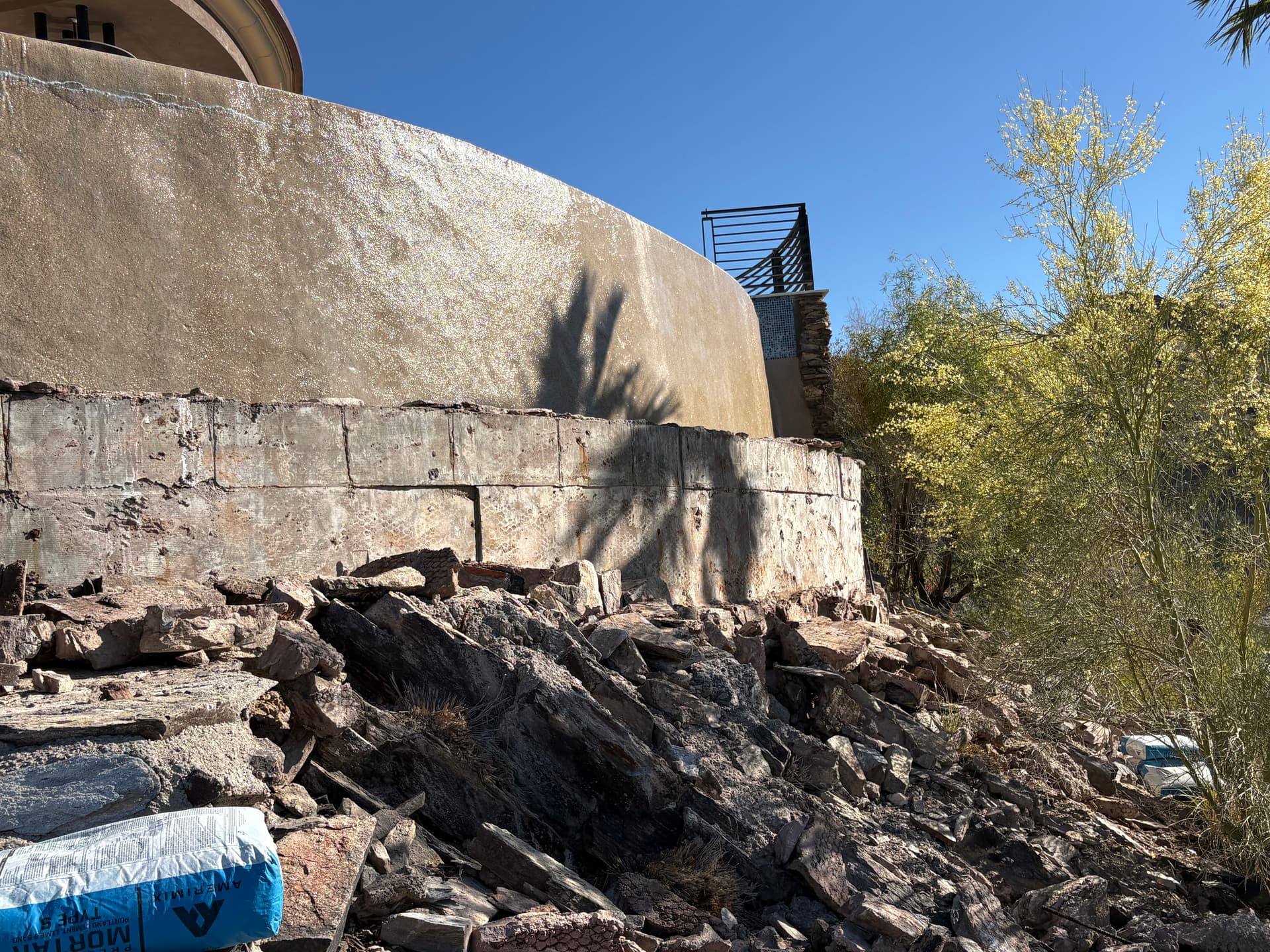
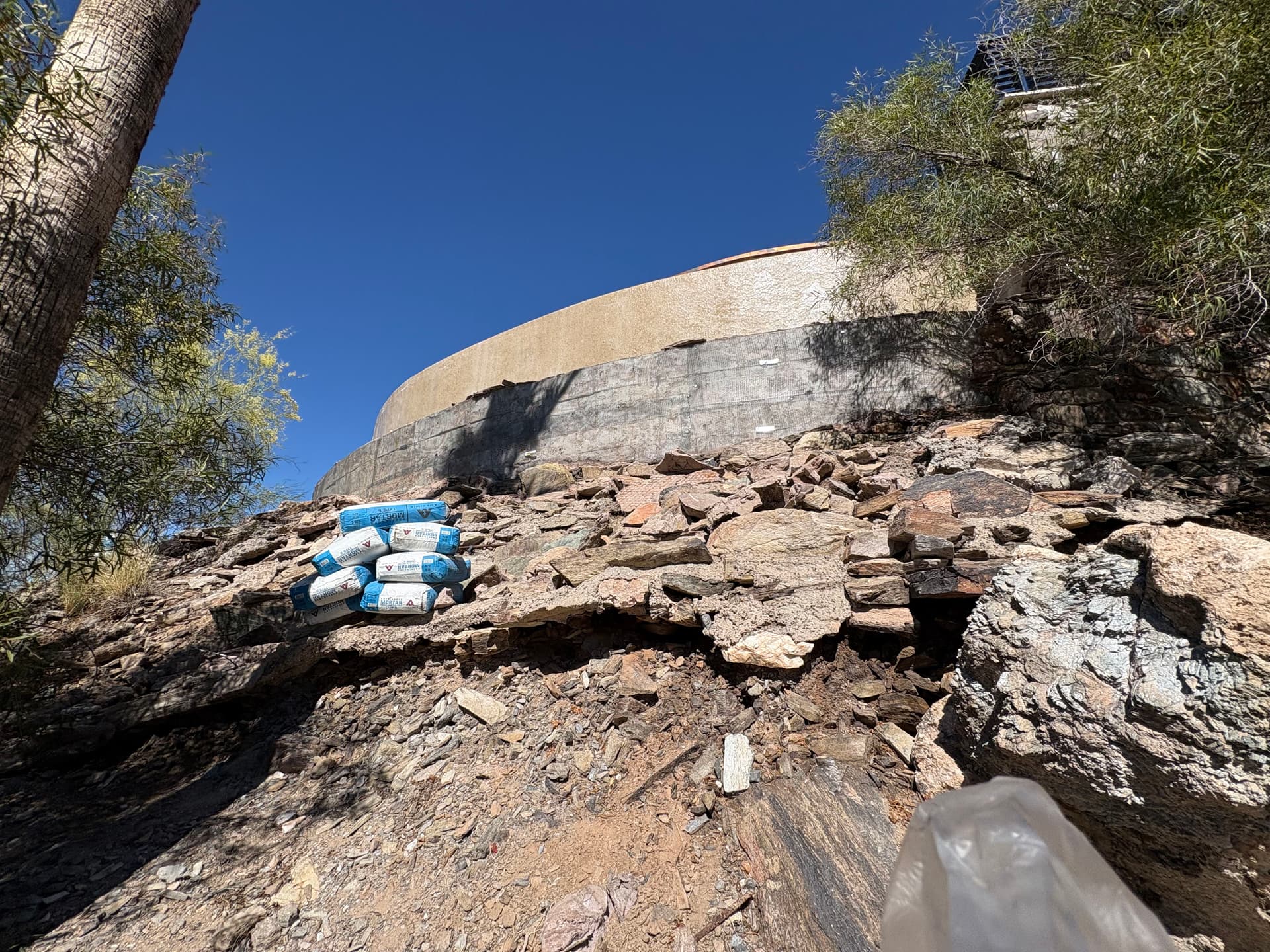
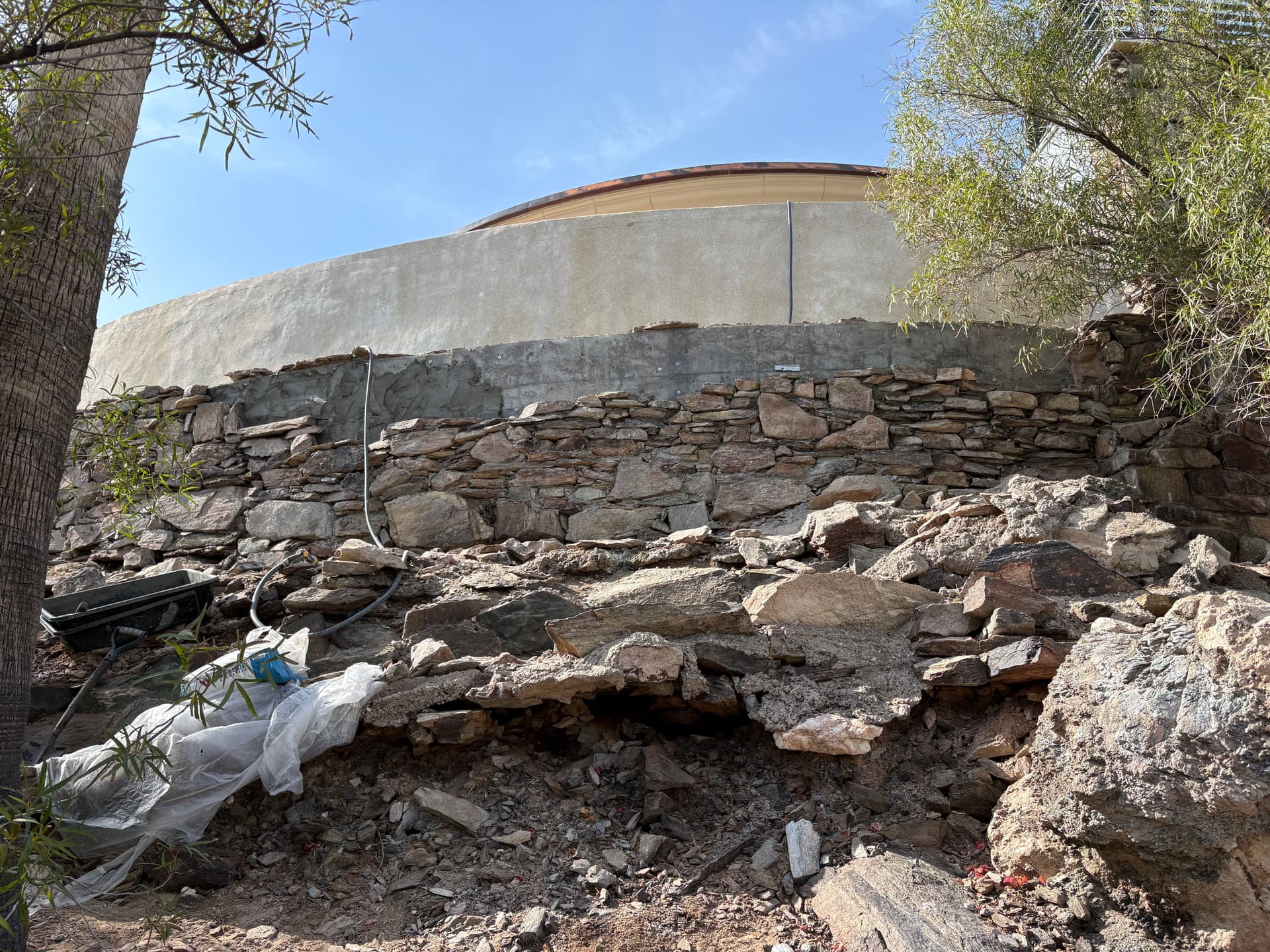
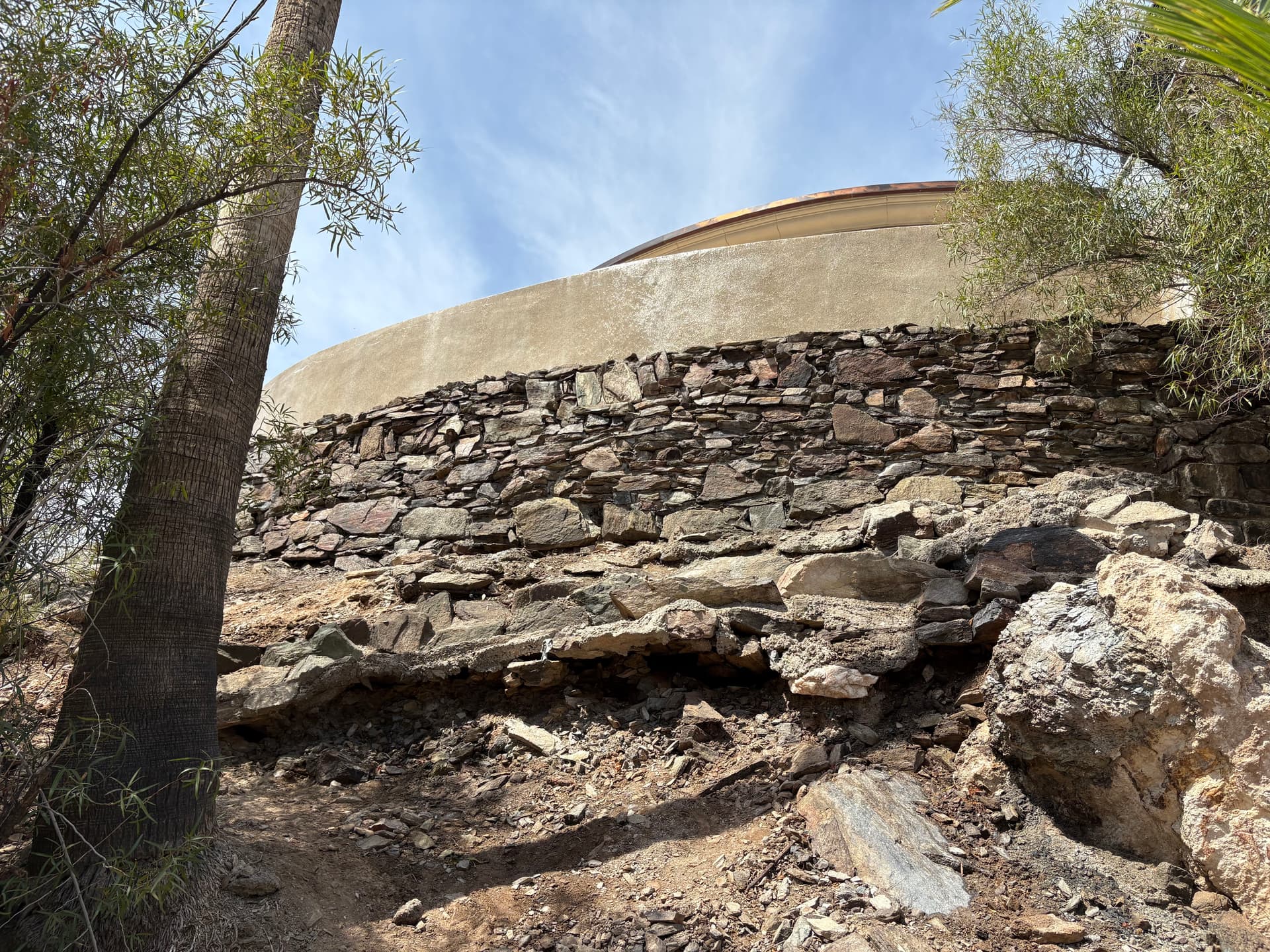
Here's what we were working with on this one. The faux stone veneer covering this curved retaining wall had separated and was coming down in chunks. The substrate underneath was exposed, deteriorating, and in no shape to hold a new finish without proper prep. We stripped everything off - all the failed material, right down to the block - and started fresh.
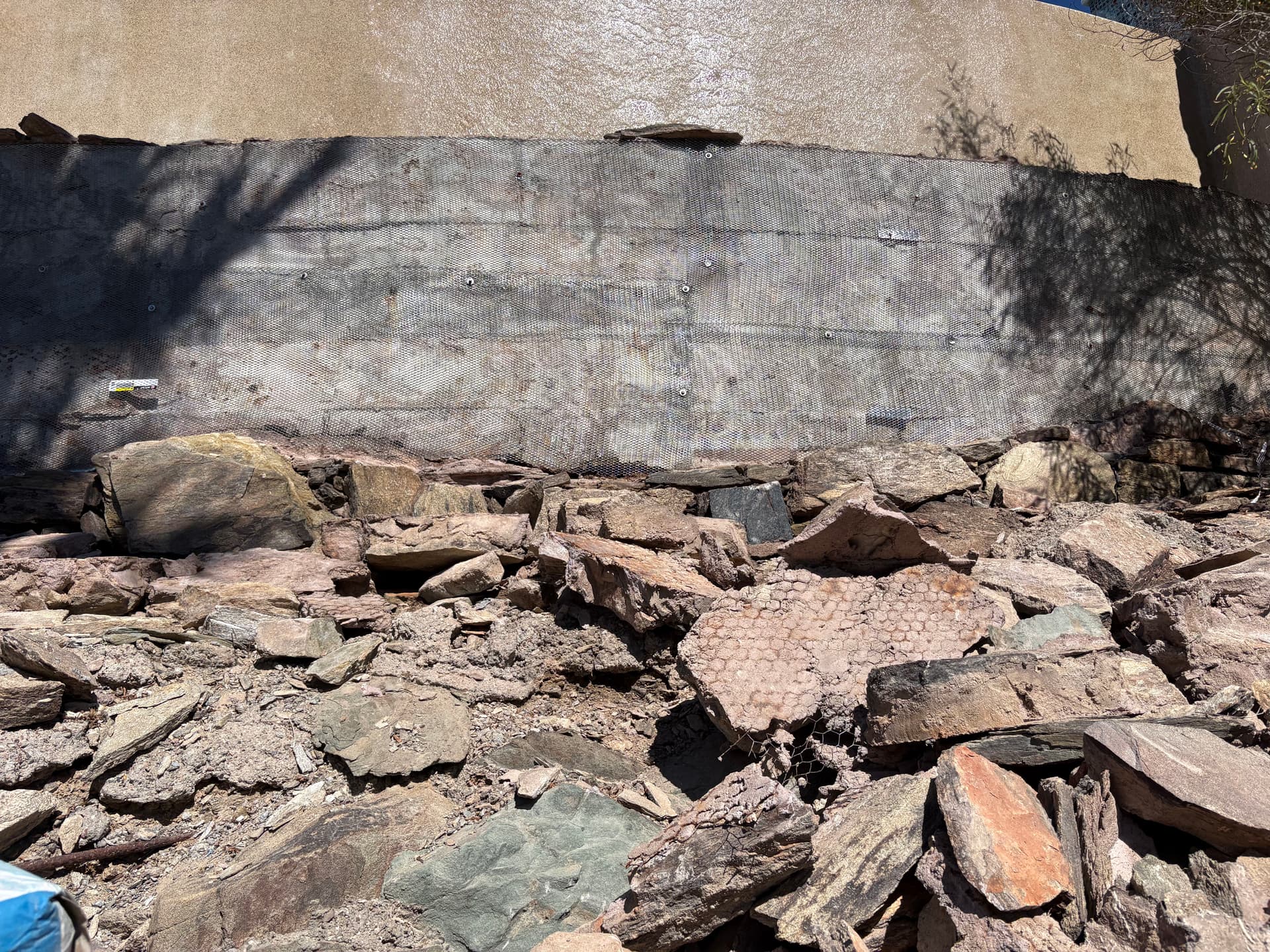
Before any new stone went back on, we fastened metal lath directly to the wall and set it with mechanical anchors. That's the step a lot of guys skip, and it's exactly why stone fails in the first place. The lath gives the mortar something to grip. No lath, no bond. It's that simple.
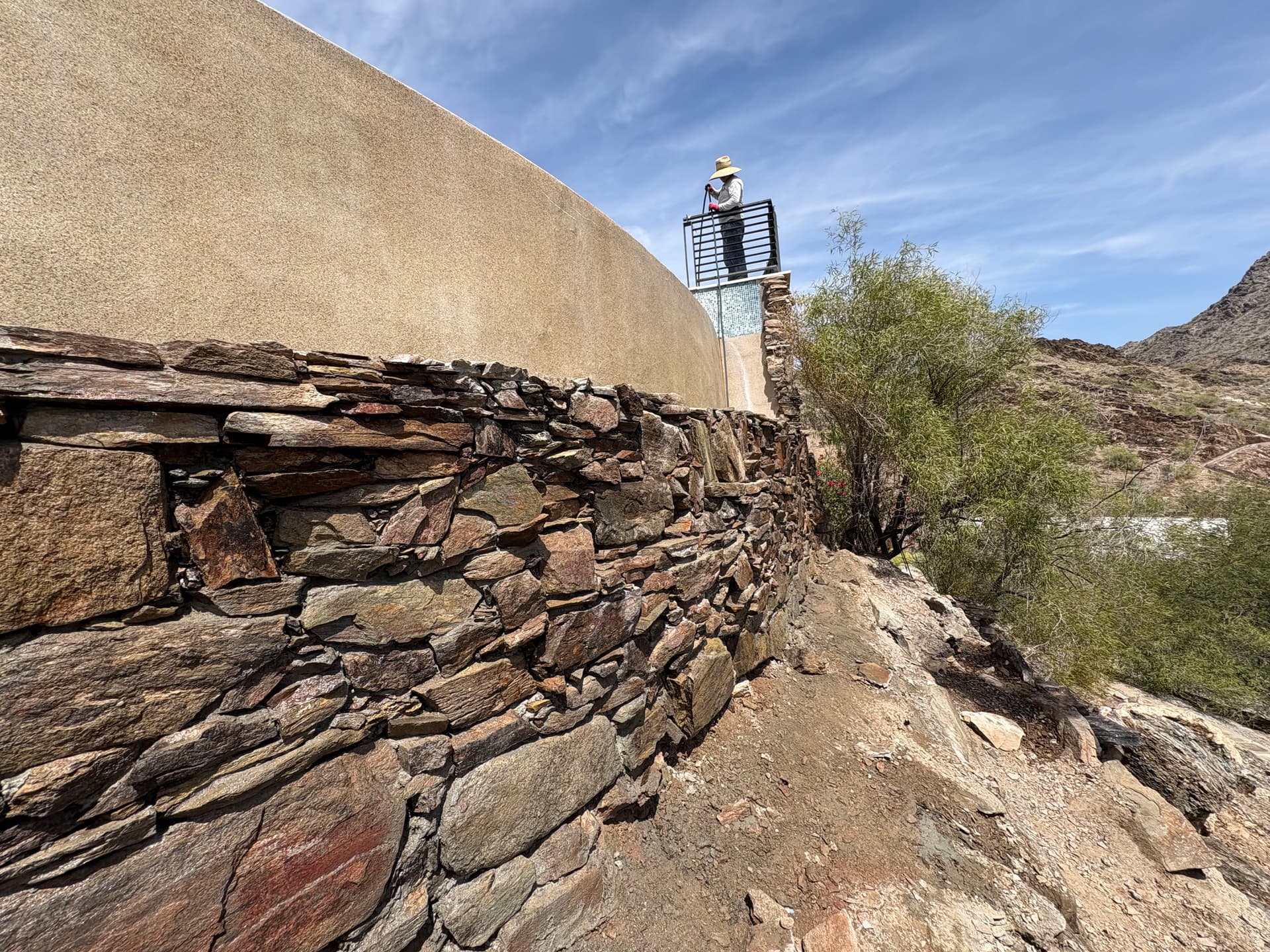
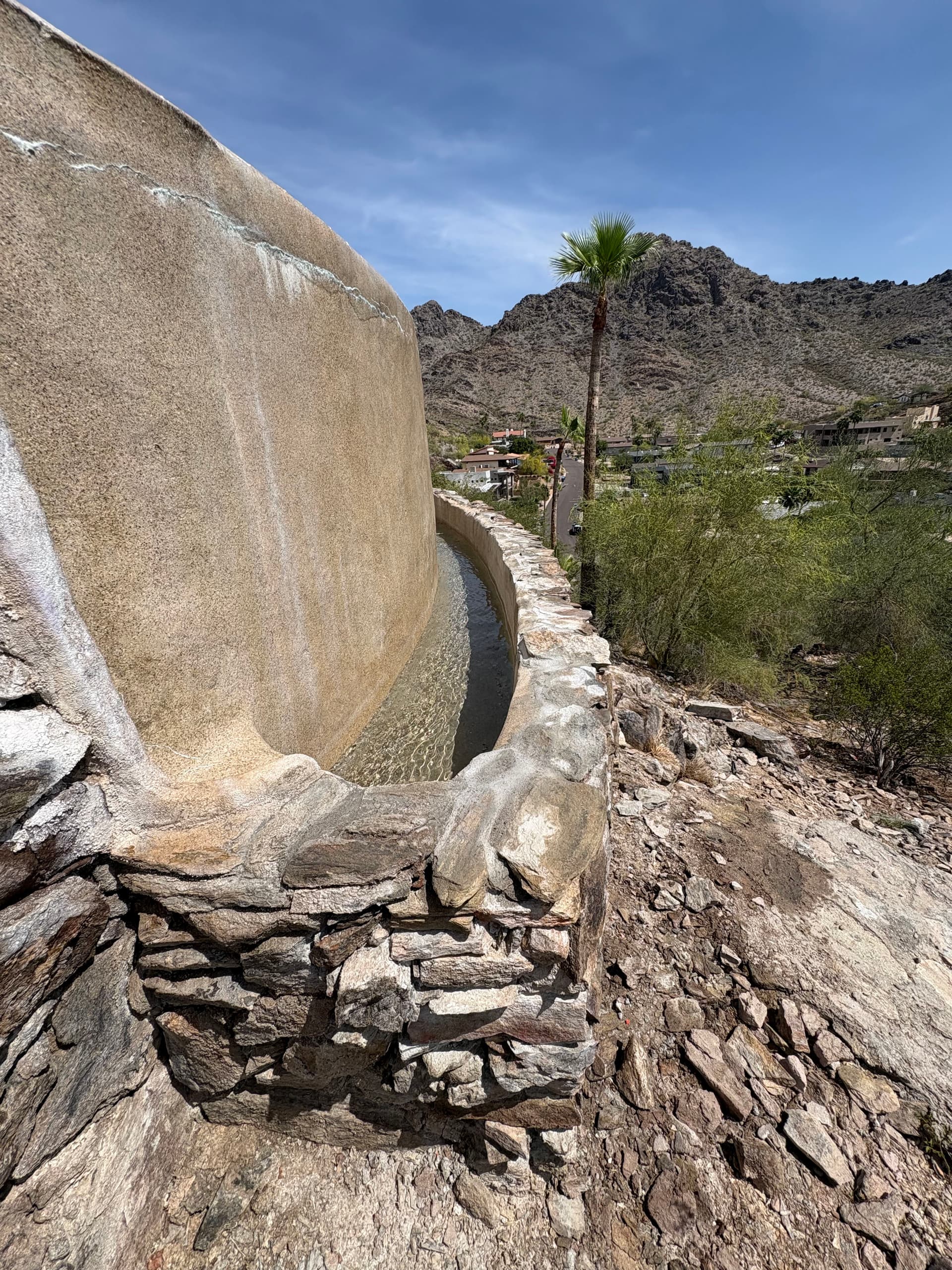
With the wall properly prepped, we laid the new stone in courses - tight, clean, and set with pre-blended mortar mixed on site. The result is a wall that actually belongs on this property. It sits solid against the structure, follows the curve of the wall cleanly, and fits the natural desert hillside setting around it.
If you've got rock, tile, or water feature finishes around your pool that are starting to crack, pop, or pull away, don't wait on it. The longer failed material stays in place, the more damage works its way into the substrate underneath - and that turns a straightforward repair into a much bigger job.